The earliest known general e-book was made in 1971 by Michael s. Hart of Project Gutenberg. The e-books made at this time weren’t available to the general public and was only shown to a limited group of people who were interested in the product at the time. The 1990s with the invention of the internet made the accessibility of e-books much easier. Many libraries in the United States started to provide free e-book access in 1998 through their websites. The actual tangible e-book product tablets weren’t available until 2009-2010. In 2010 the Public Library Funding and Technology Access Study found that 66% of public libraries around the nation were offering e-books.


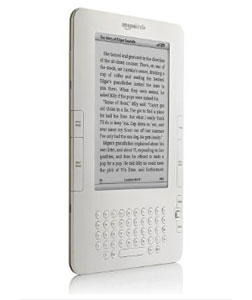
The Amazon Kindle came out in February 2009, which offered the Nook its main competition. The Kindle surpassed paperback books by almost 50% during 2010 making a revolutionary change for booksellers around the country. The Kindle, like the Nook, has Wi-Fi capabilities which allows its readers to shop and download their books right from their devise. Like the Nook, the Kindle has a black and white E Ink display screen which offers easy reading in the sunlight and under bright lights. Amazon then came out with the Kindle DX, which has the same features of the original Kindle but displays a larger screen and is marketed towards displaying content in textbooks and reading newspapers.
Gavin Grant’s publishing boutique in Massachusetts says that new technologies have transformed his work in several ways. “He licenses some books via Creative Commons; releases others as downloads in a variety of ebook formats and deploys social media, in form of blogs and Facebook-enabled communication, to publicize and attract passionate readers to the firm’s website” (mitworld.com, 2010). The digital book era has also made way for author produced book trailers on YouTube. Other publishing companies see the transformation of books into digitalized electronic reading devises as a transition that was inevitable.
We now have websites like lulu.com, which allows people all over the world who aren’t world renowned writers to publish and sell their own books from front to back cover. Lulu.com was published in 2002 by CEO and founder, Bob Young. There are six international versions which includes sites for the U.K., French, Dutch, German, Italian, and Spanish costumers. Within the site you are able to publish paperback, eBooks, mini books, photo books, calanders, cookbooks, travel books, CDs, and DVDs. Each creator of the book is able to keep 80 percent of their profits if they choose to sell their books through the site. The site itself publishes about 20,000 books-of-choice per month.
Having a site like lulu.com doesn’t completely throw editing companies under the bus. Sites that allow their own customers publish what they want raises the consumer rates. The fact that lulu.com also allows for their customers to publish books in the e-book format shows that the site is up to date with the latest consumer media.
Media brings an uncertain and unpredictable future but the transformation and evolution of media is inevitable. As long as the technology we have can be sustained and there are people out there who make advances, one can never tell where we will end up next. With technology like the Nook and Kindle it still allows people to enjoy the satisfaction of sitting down and reading a book without the tangible page turns and collection of bookshelves. < The possibilities are endless in regards to where the digital age of literature is going. Maybe one day we’ll pick up our Nooks or Kindles and see moving images like in Harry Potter with their animated news papers.


No comments:
Post a Comment